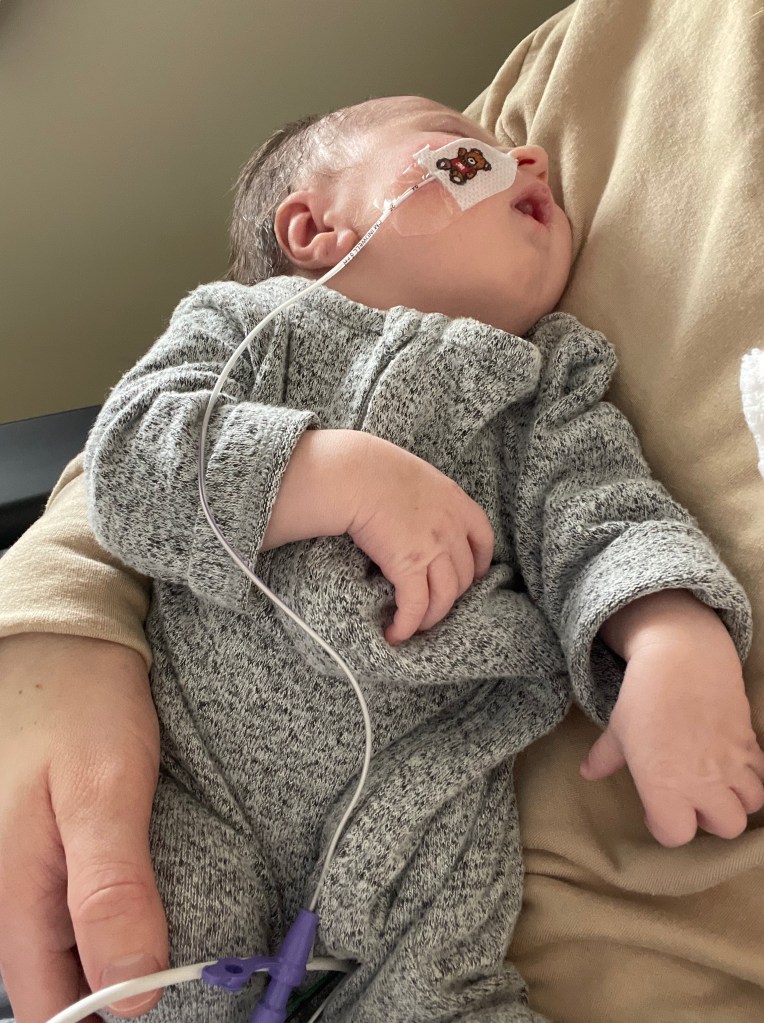
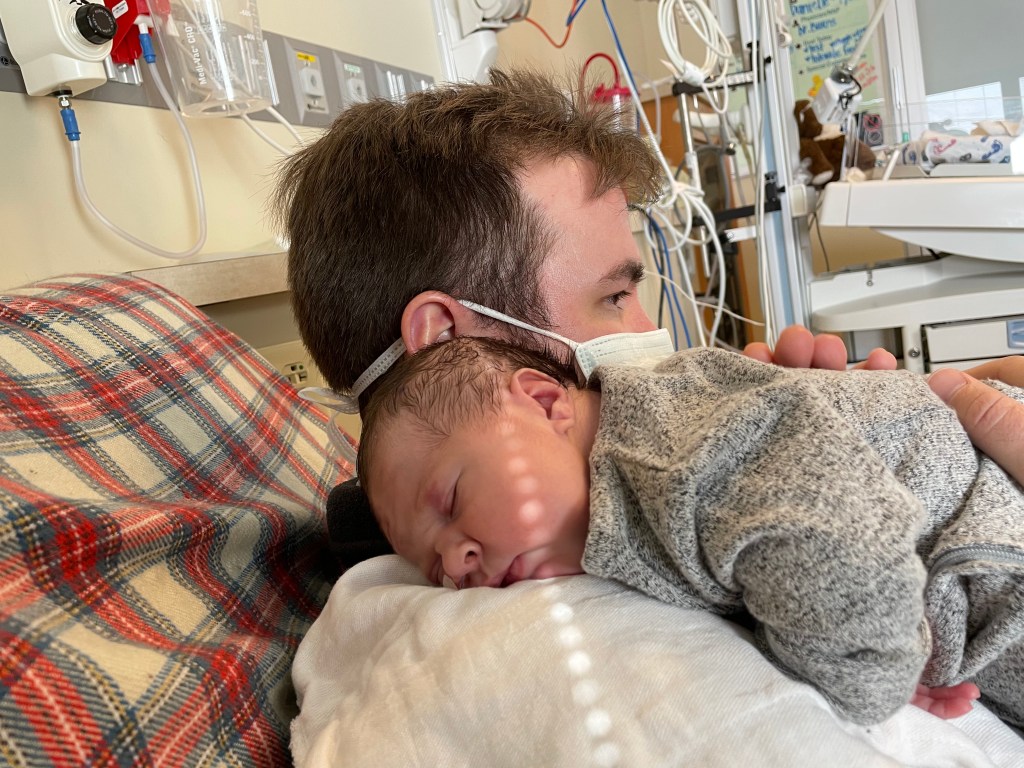
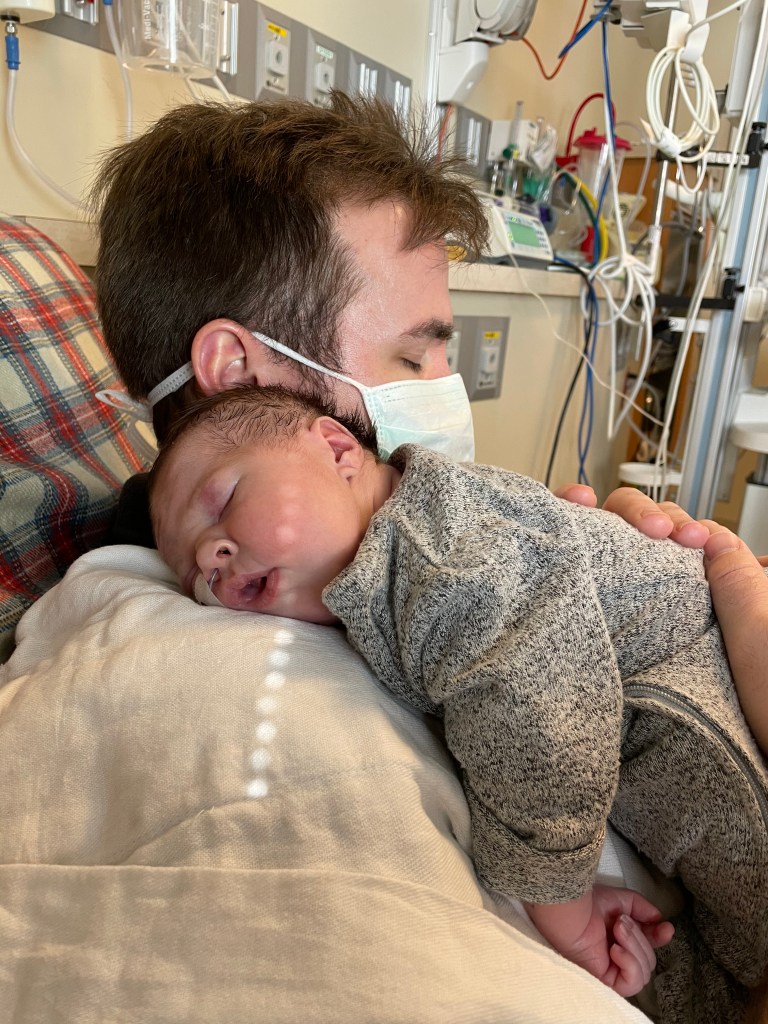
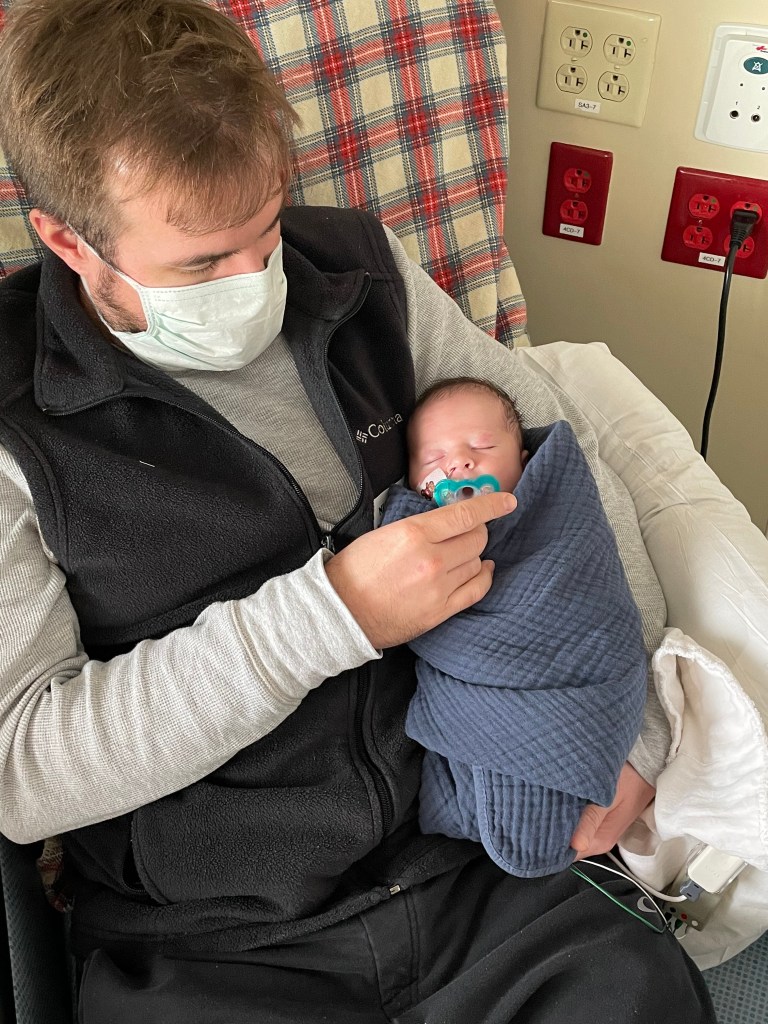
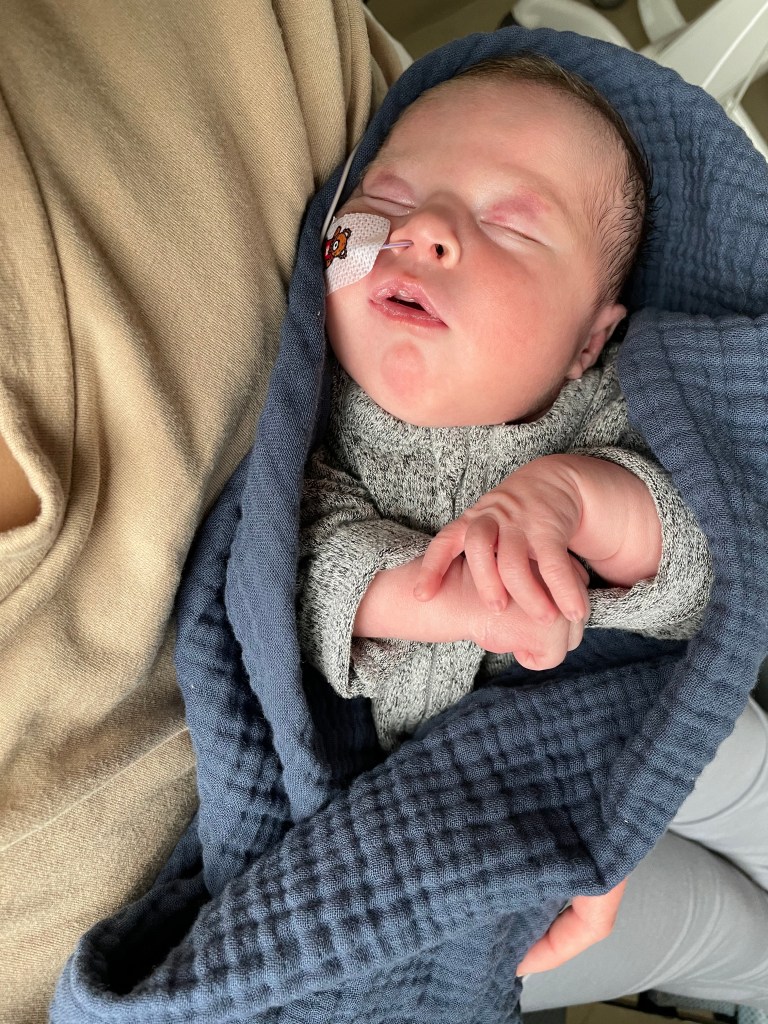
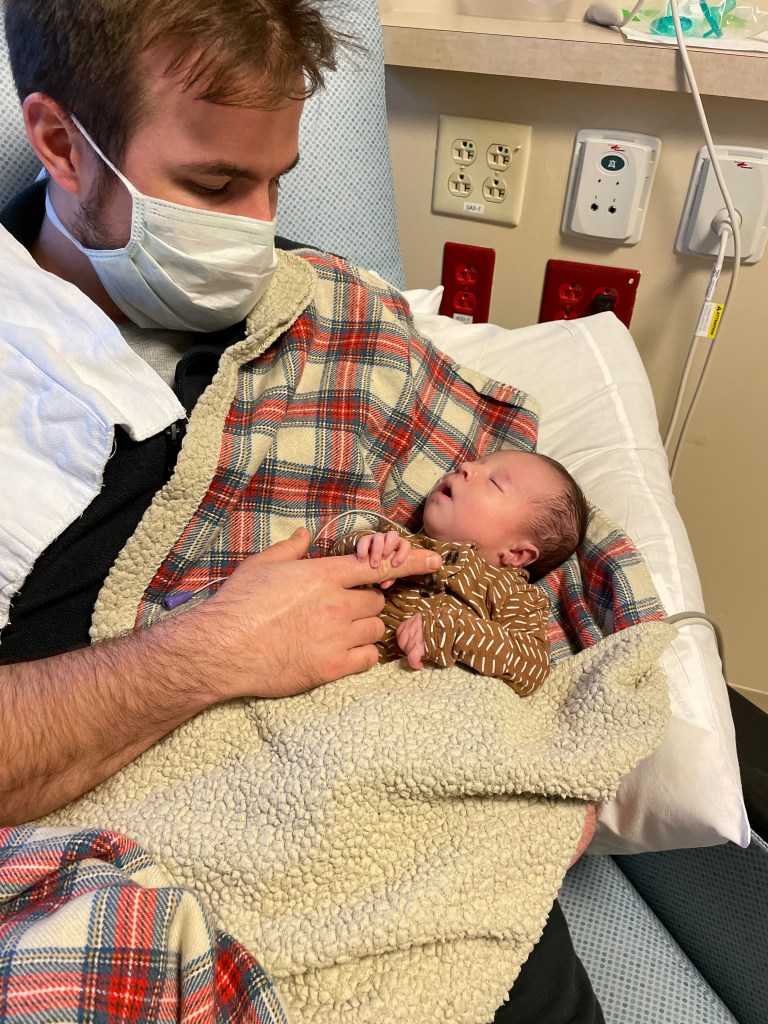
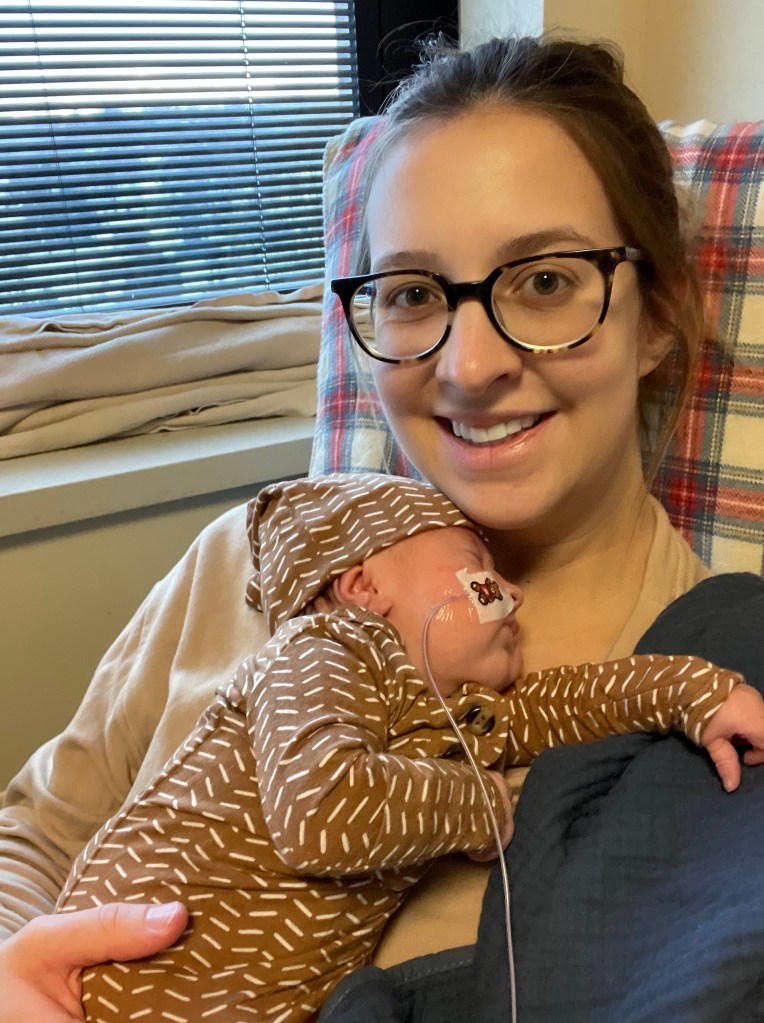
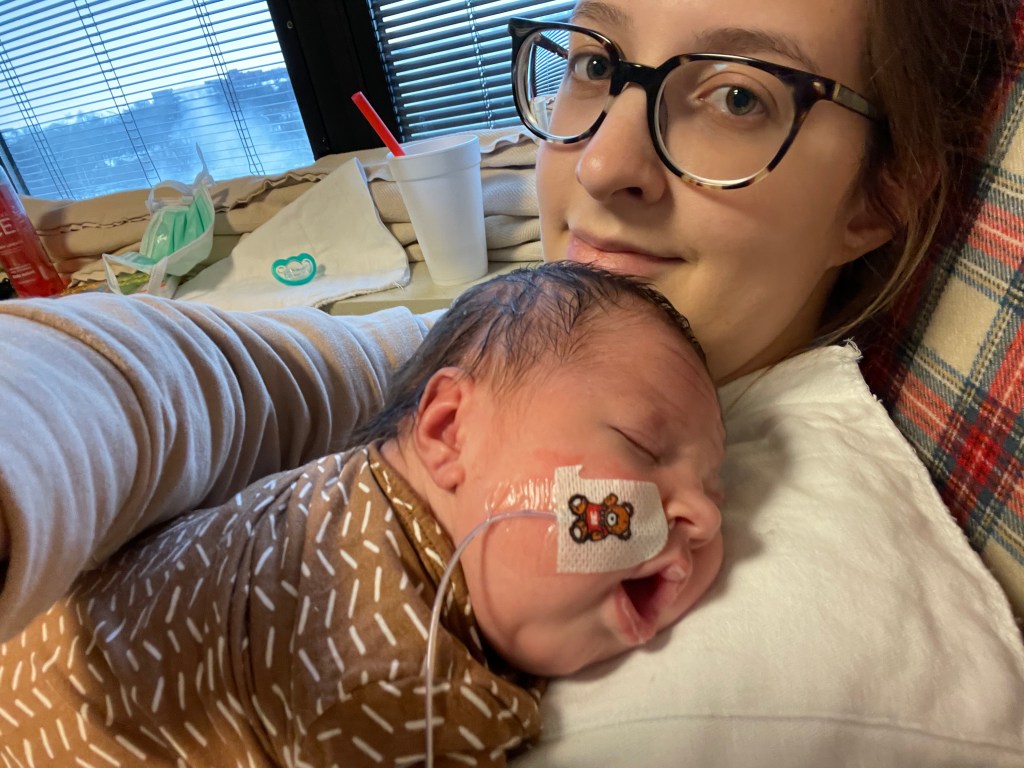
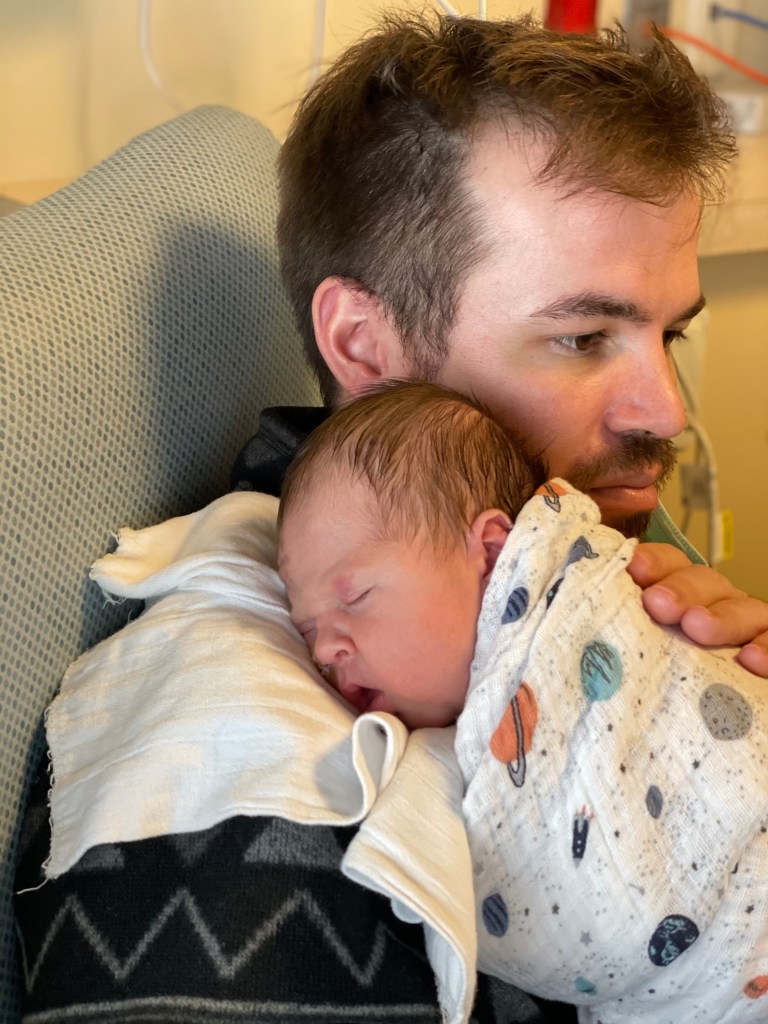
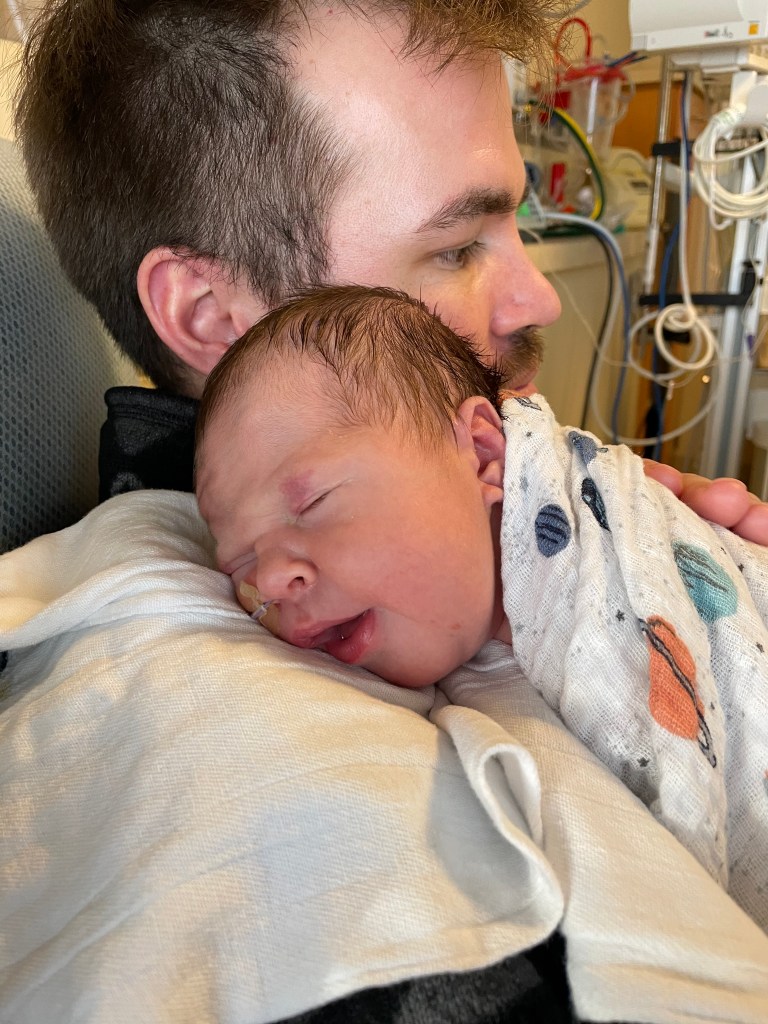
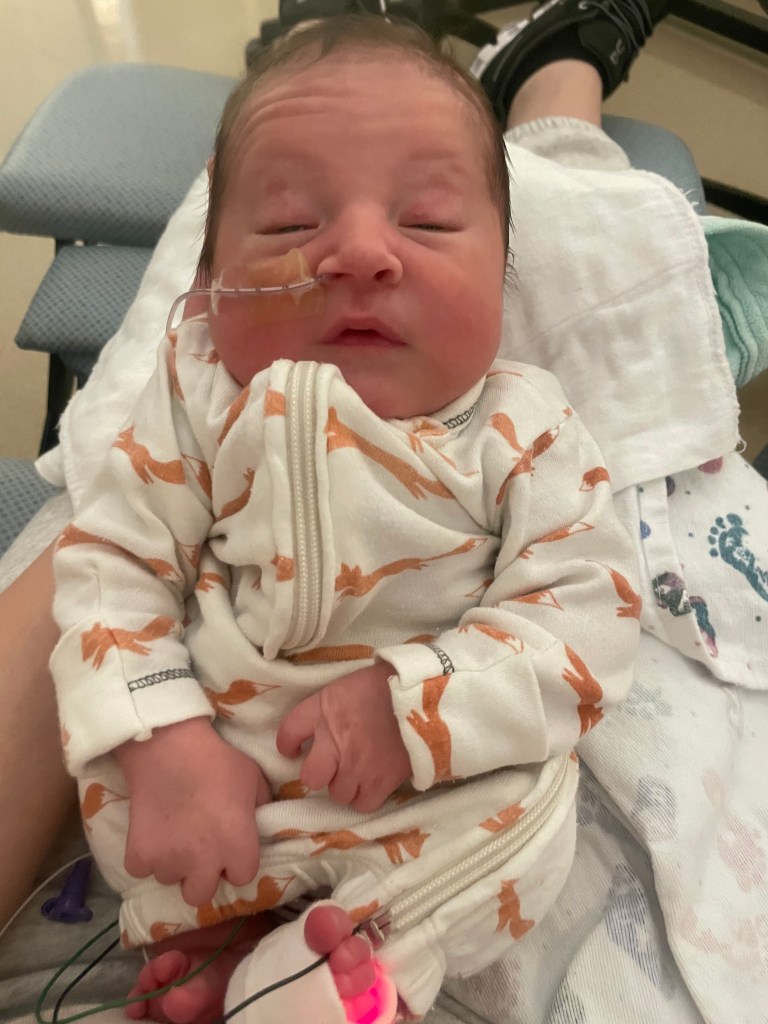
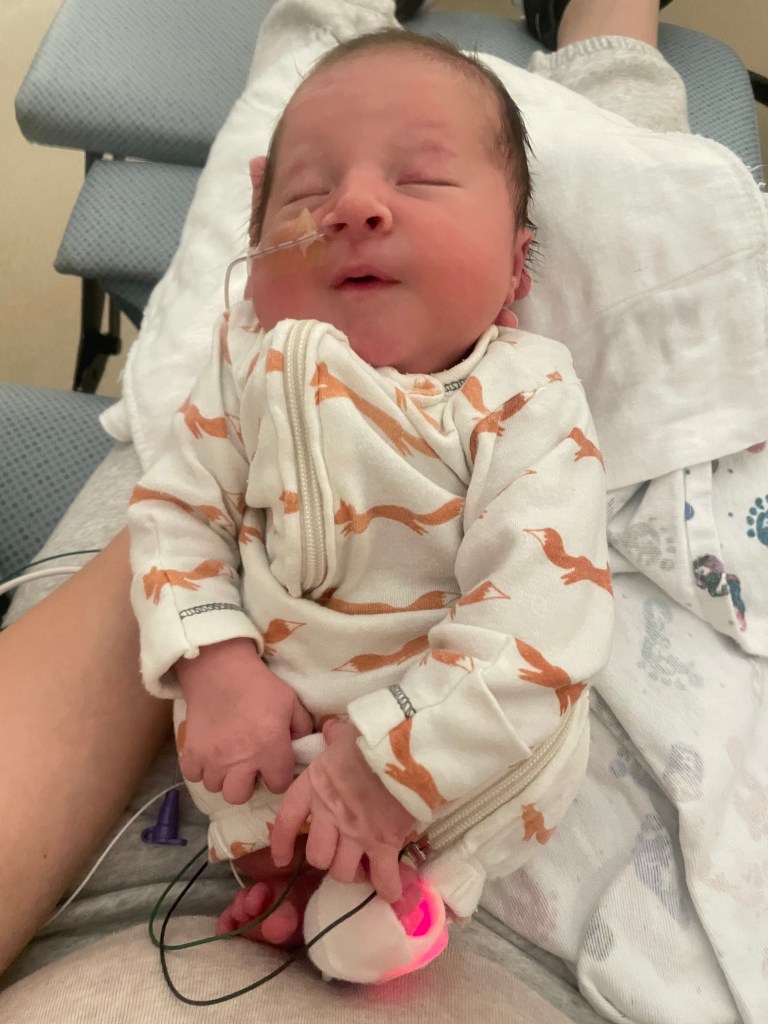
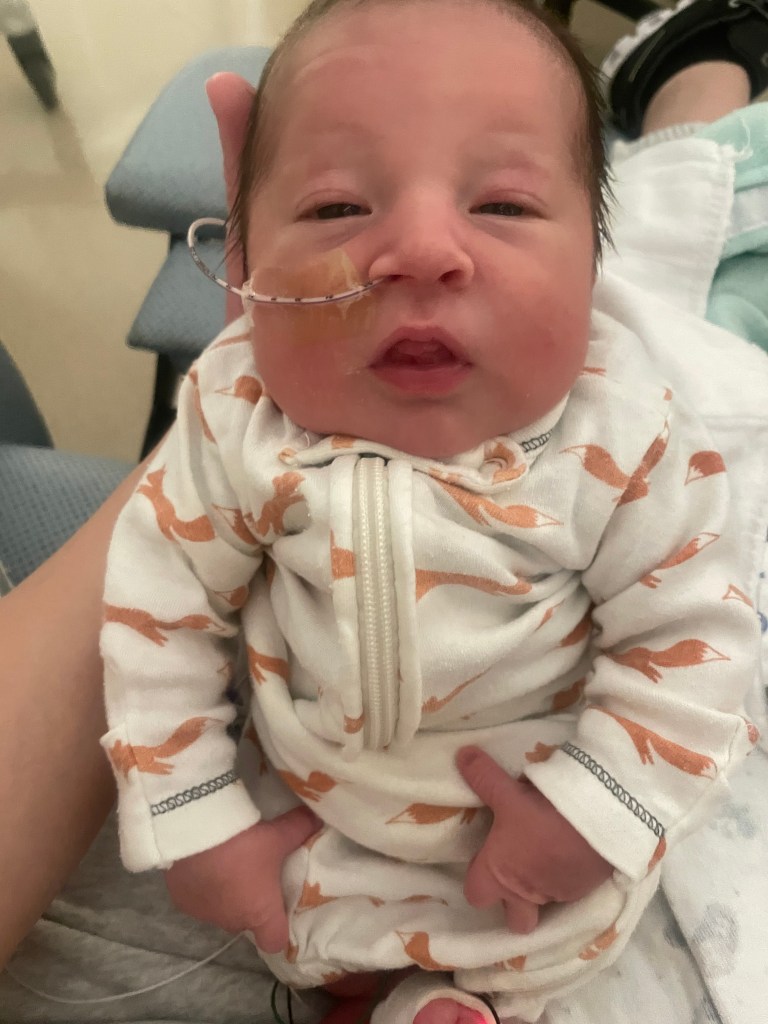
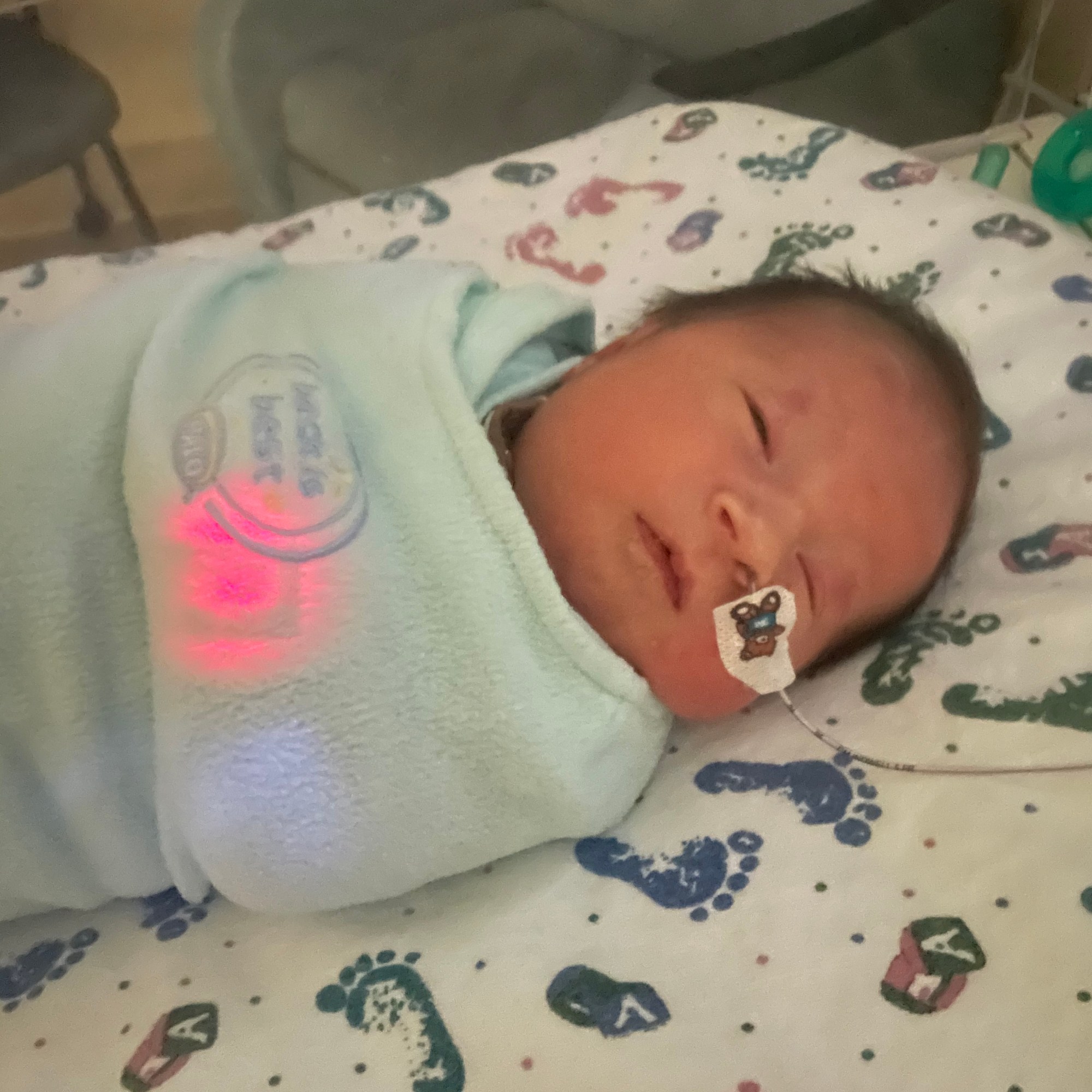
I think it clicked with Dax on this day that he saw his mom. He looked up at me with the widest eyes. He is so sweet.
8 days old.


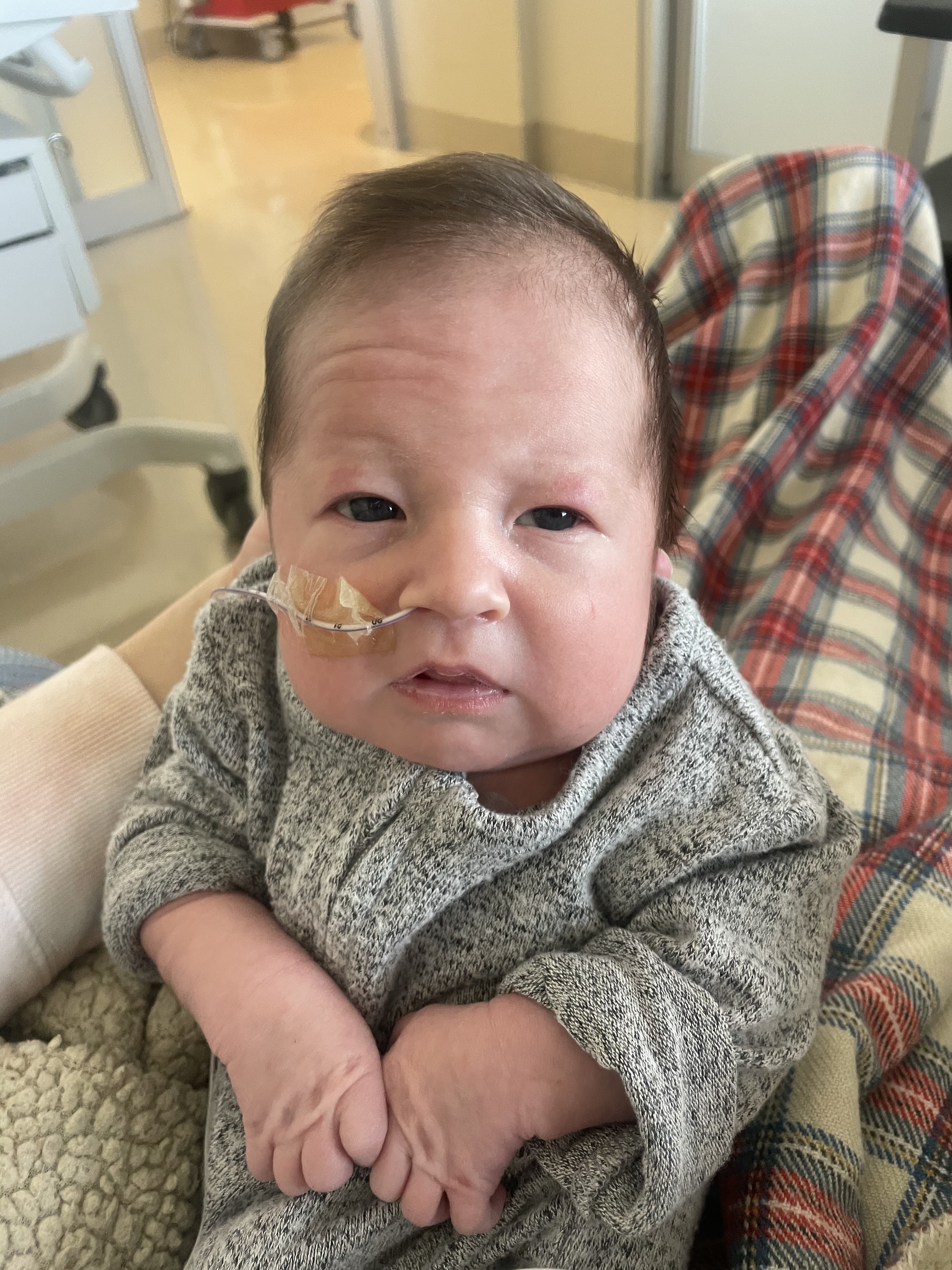
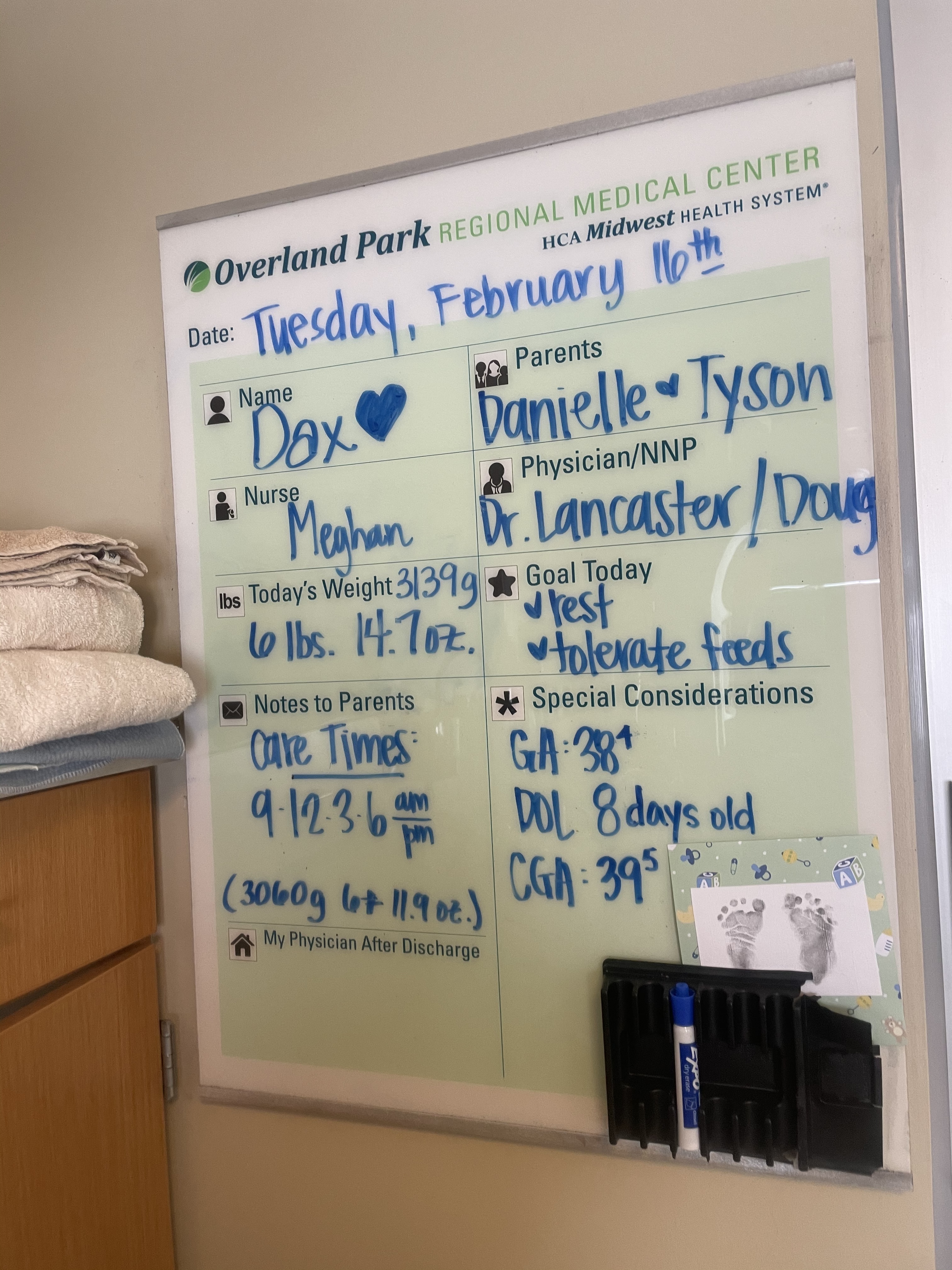
We’ve been through a roller coaster of emotions, there are no words to describe what we’ve experienced. Every day in the NICU there’s more and more information thrown at us and being overwhelmed is an understatement. You try to process the information you’ve been given and before you can finish, more information is crammed down your throat. We’re working with a team that consists of a neonatologist, a neurologist, a developmental pediatrician, our regular pediatrician, G-tube surgeon, speech therapy, physical therapy and occupational therapy. We’ve also had to face conversations with hospice – conversations and thoughts that no parent should have to face. We’re fortunate to have a great support system through our journey. I told Dax that he’s making us pretty damn strong parents the first time around – but we’re not nearly as strong as him.
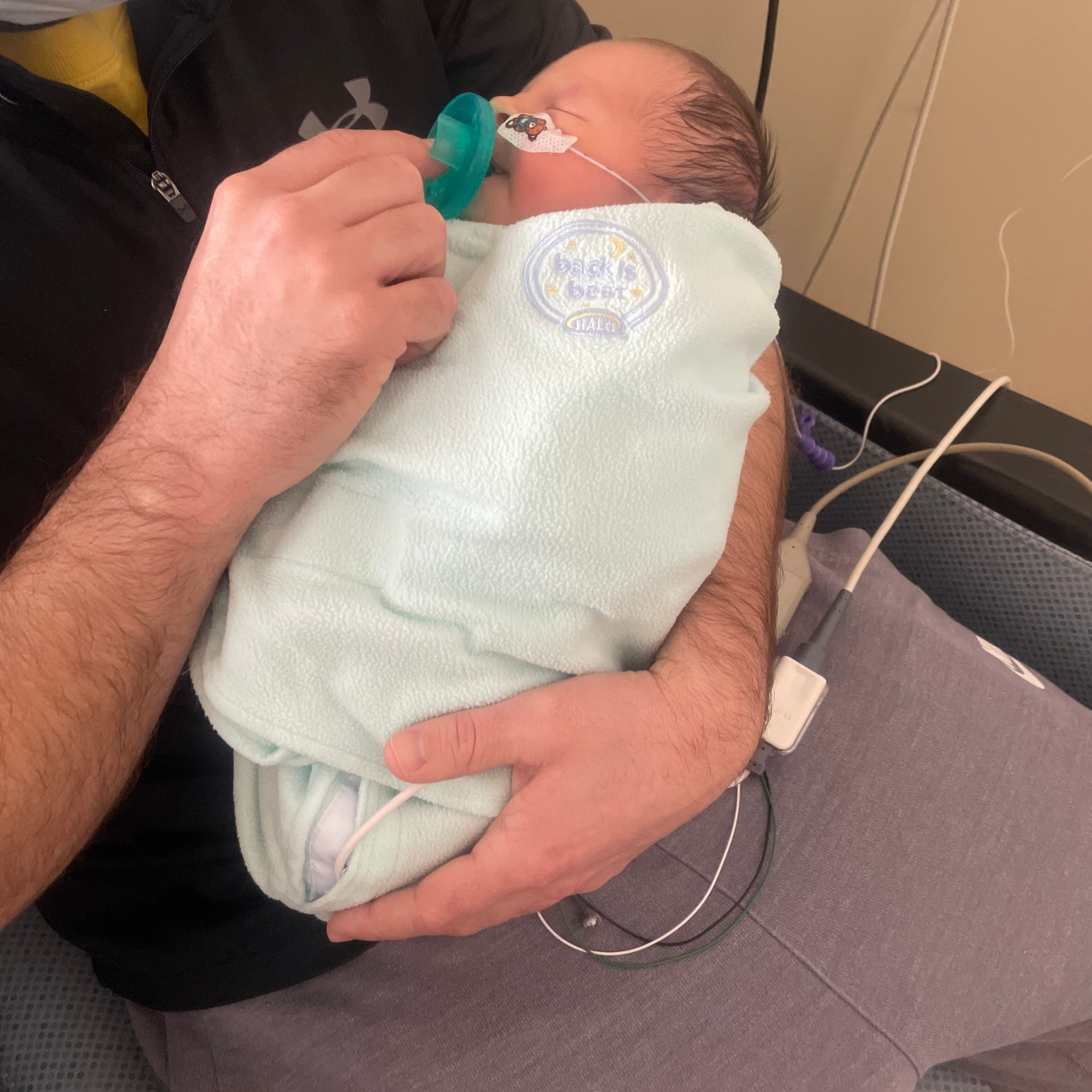
Valentine’s Day.
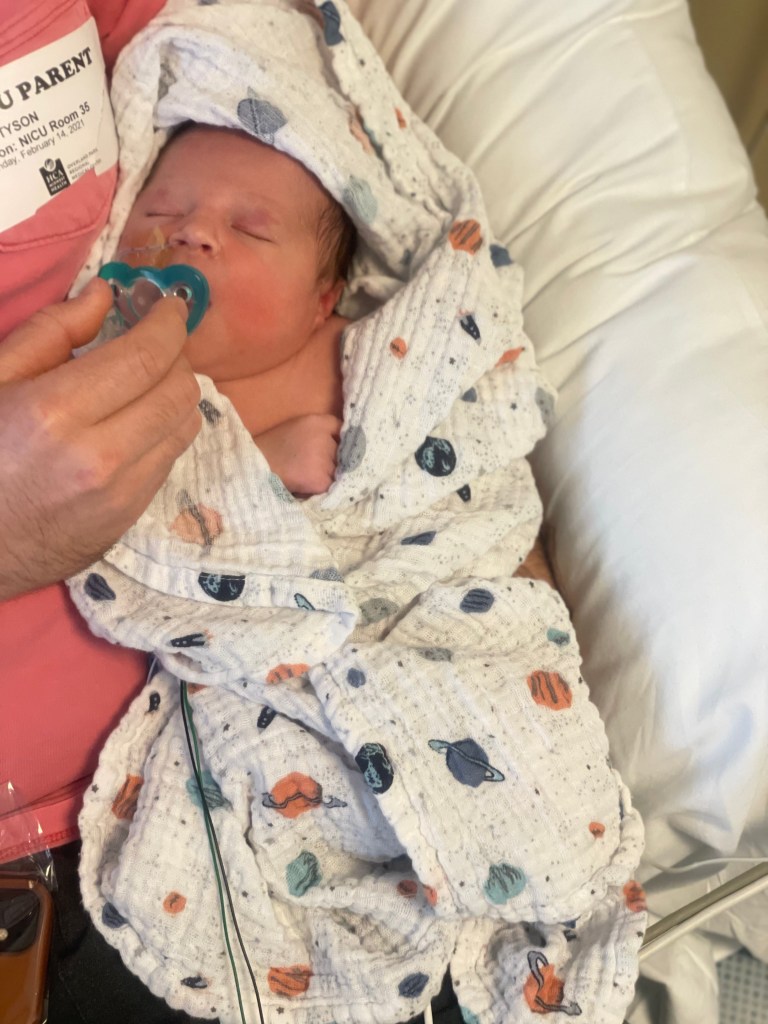
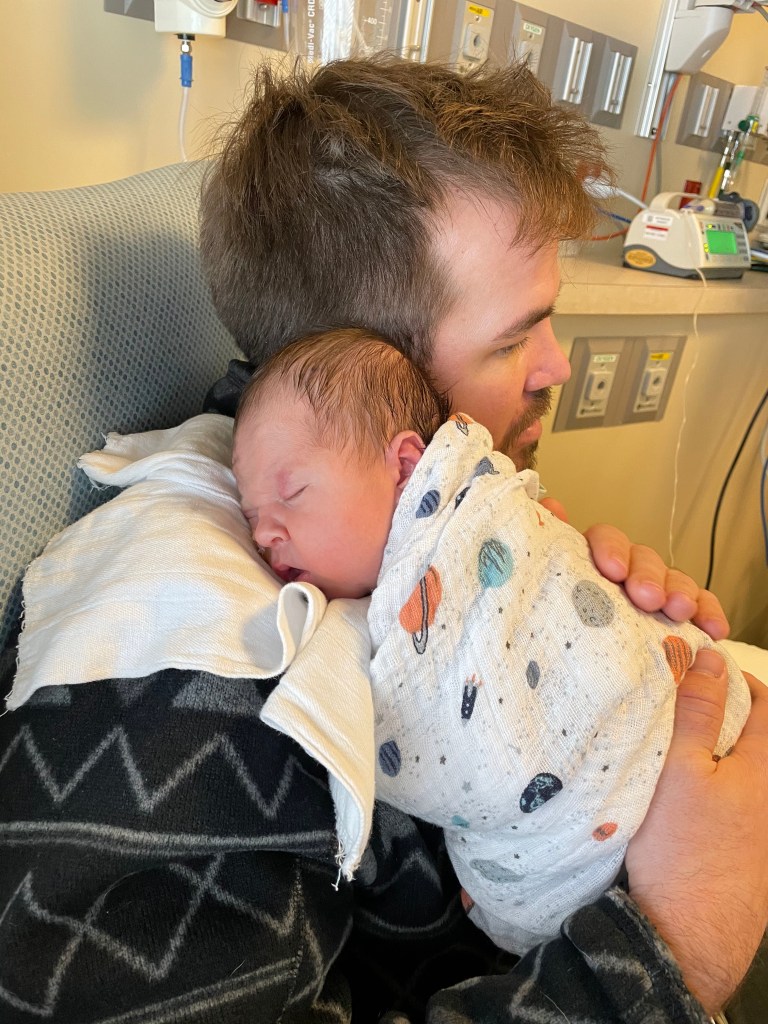

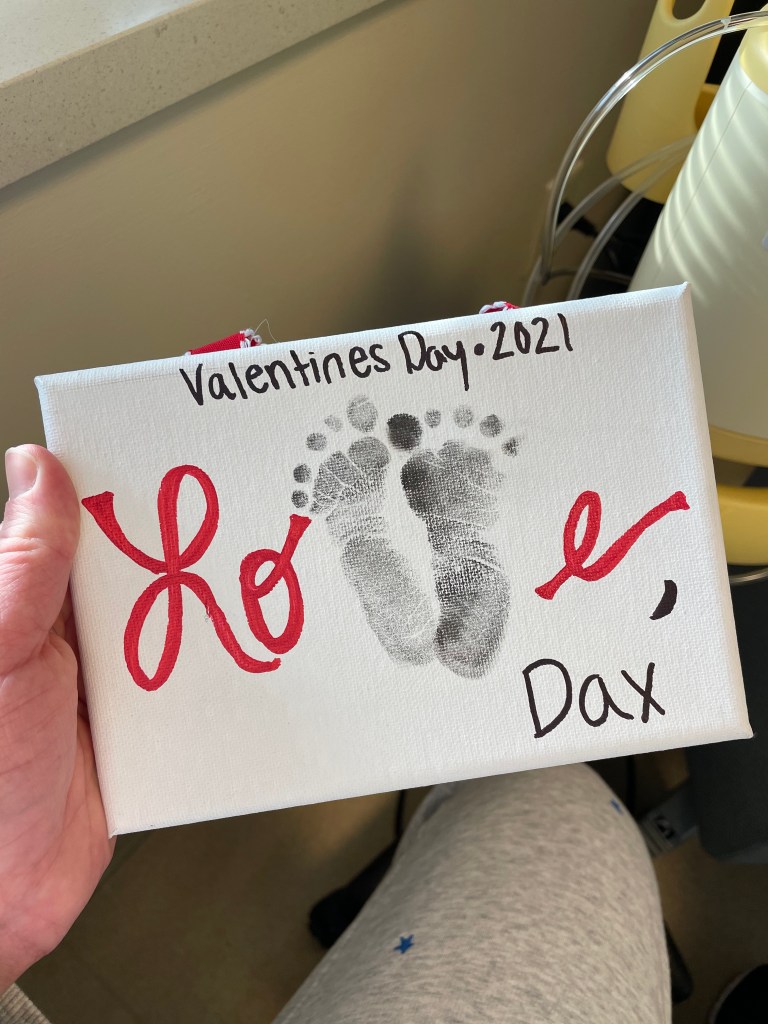
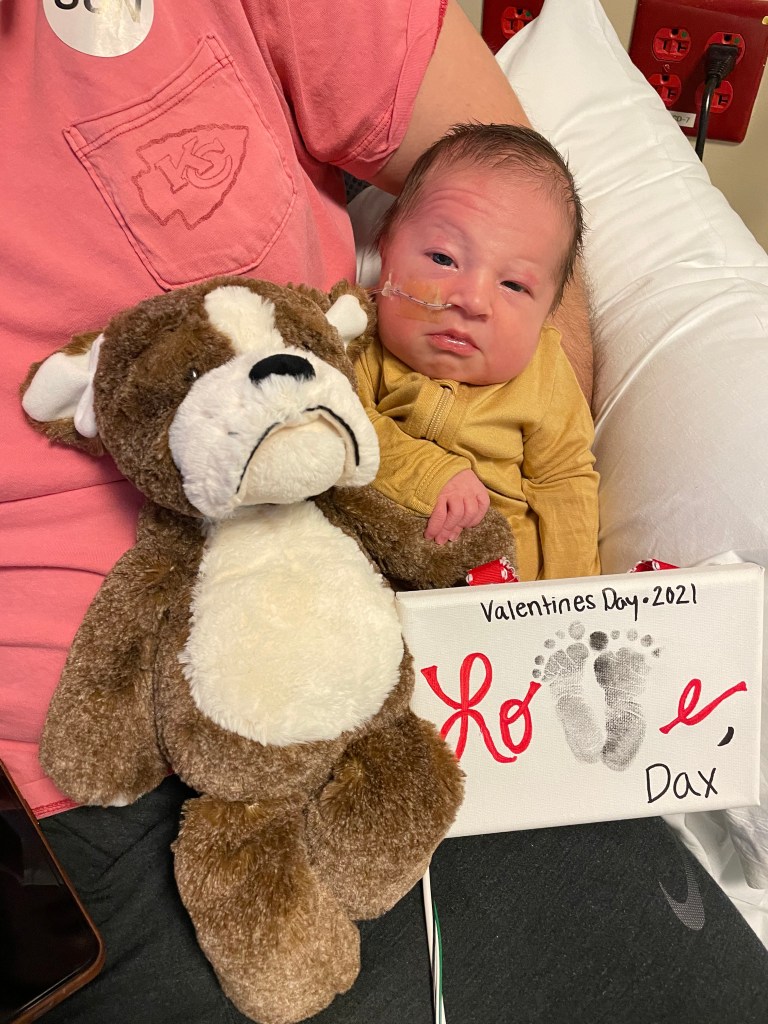
We have an English Bulldog named Ozzie (pictured on our home page) so naturally Dax’s first holiday gift had to be one from his brother. Tyson teased me and said that he didn’t get me flowers for Valentine’s Day, and I told him it was okay, he gave me a baby.
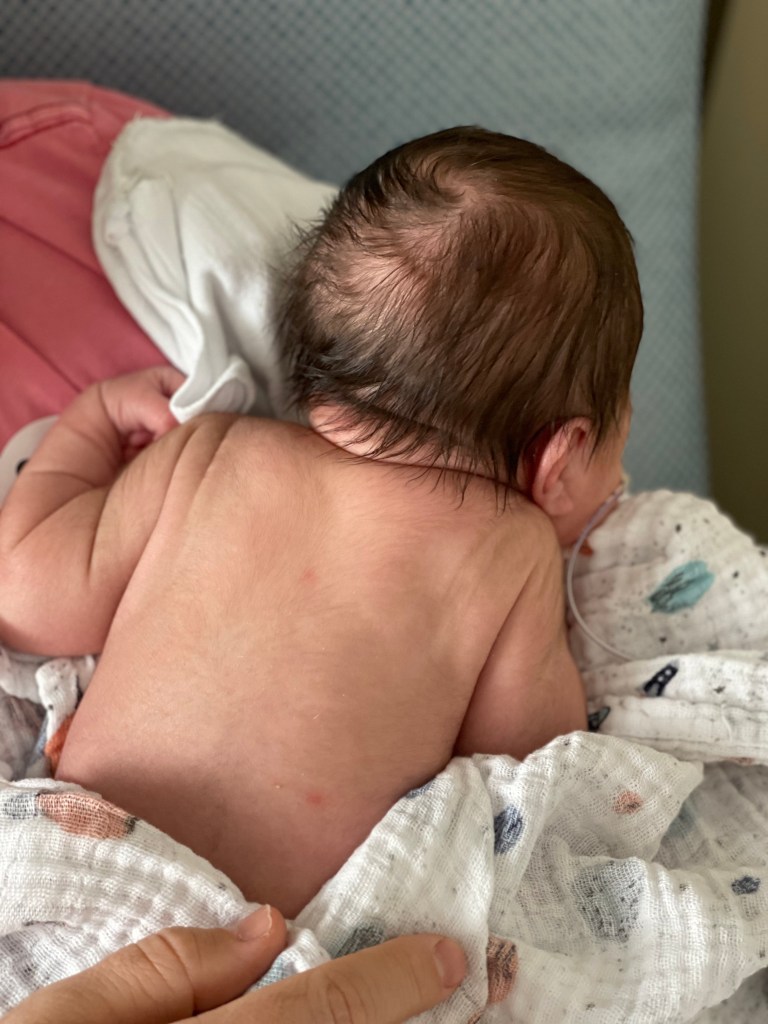
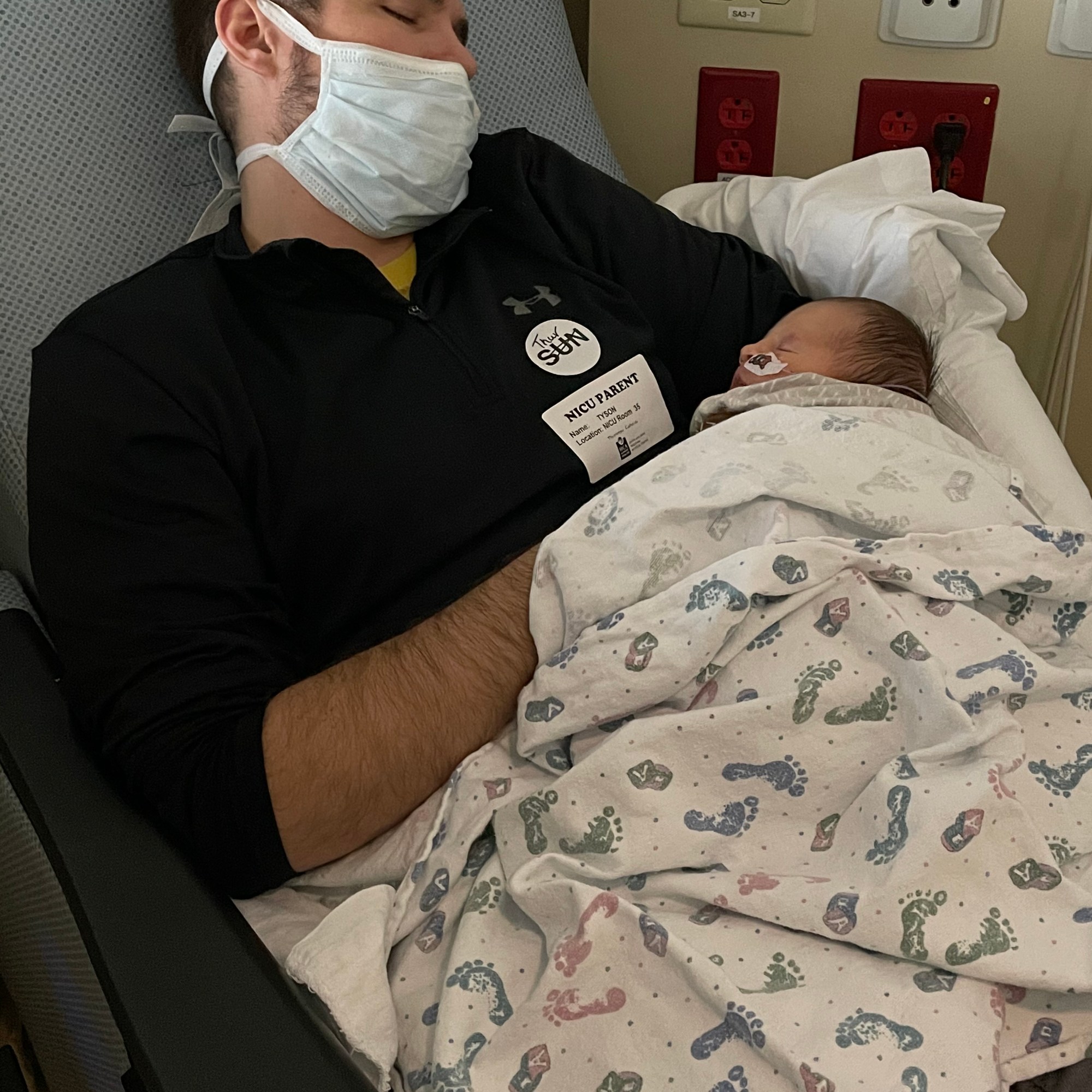
5 days old.
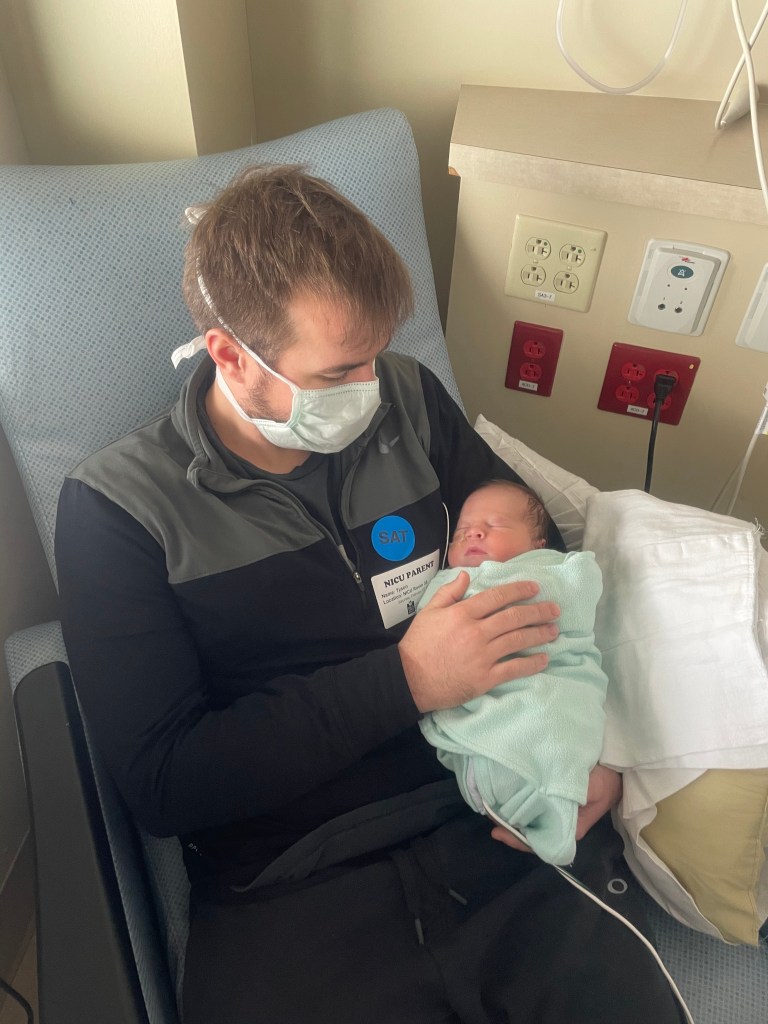


Waiting for more answers.
The 24 hour brain monitoring ruled out the seizures. The doctors then recommended that we do an MRI and meet with a genetic specialist to discuss what was going on (Dax’s results for the Trisomy’s came back negative). We waited another day for the neurologist to read the results and to speak with the geneticist. The neurologist spoke with us and walked us through Dax’s MRI. We got the dreaded news that his cerebellum was maybe only 10% developed. Along with that, the pons and corpus callosum were also severely under developed.
——
Although the cerebellum accounts for approximately 10% of the brain’s volume, it contains over 50% of the total number of neurons in the brain. Researchers believe the cerebellum plays a role in thinking, including processing language and mood, as well as attention, fear response, and pleasure or reward response.
The cerebellum receives information from other regions of the brain and nervous system including the brain stem, spinal cord, and cerebrum. This incoming information is then used by the cerebellum to coordinate and control voluntary movements. The cerebellum helps organize all of the actions of the muscle groups involved in a particular movement to ensure that the body is able to produce a fluid, coordinated movement. This includes eye movements and movements associated with speaking.
The cerebellum is like a “mini-brain” when it comes to movement and plays an important role in coordination, balance and posture, mental function, movement, motor learning, and vision. As well as in speech and a number of important mental processes.
Movement is a complex process that requires a number of different muscle groups working together. The cerebellum plays a major role in adapting and fine-tuning motor programs to make accurate movements through a trial-and-error process. As you fine-tune your motor movements, you eventually become better able to perform the skill, and eventually, you can perform the action seamlessly. The cerebellum plays a critical role in this motor learning process. Consider how many muscle groups are involved in the process of walking, running, or throwing a ball.
——
The pons is an essential part of the brain located above the medulla. It falls in the category of the hindbrain. The pons is a very important part of brain for the regulation and control of a number of vital functions. It not only acts as a control center, but also contains nuclei of some important cranial nerves.
The corpus callosum is a large, C-shaped nerve fiber bundle found beneath the cerebral cortex. It stretches across the midline of the brain, connecting the left and right cerebral hemispheres. It makes up the largest collection of white matter tissue found in the brain.
——
We were hit with another freight train when our neurologist explained that Dax’s time with us would be limited. He continued to say that most babies with these clinical findings expire within a year. Yes, that’s the word he used. With Dax’s diagnosis, there was no way to detect it early. It’s almost always diagnosed after birth, if the baby makes it. Sometimes it can be found in an ultrasound IF there are reasons to do extra scans and reasons to look closer at the brain. But, I tracked right on schedule during my pregnancy and Dax’s heart rate was always consistent. There was no need for closer monitoring. The neurologist continued to tell us that when all of those things in the brain are underdeveloped, the baby is usually miscarried in the second trimester. He said that it was a testament to how well I carried him and how I was able to provide him what he needed during the pregnancy for him to make it. That’s one of the main statements that’s helping us heal and to stay positive. Dax just being here is the miracle in it all. We know he really wanted to meet his mom and dad. We’re so grateful we got to bring our baby home and have him experience the feeling of being loved and nurtured.

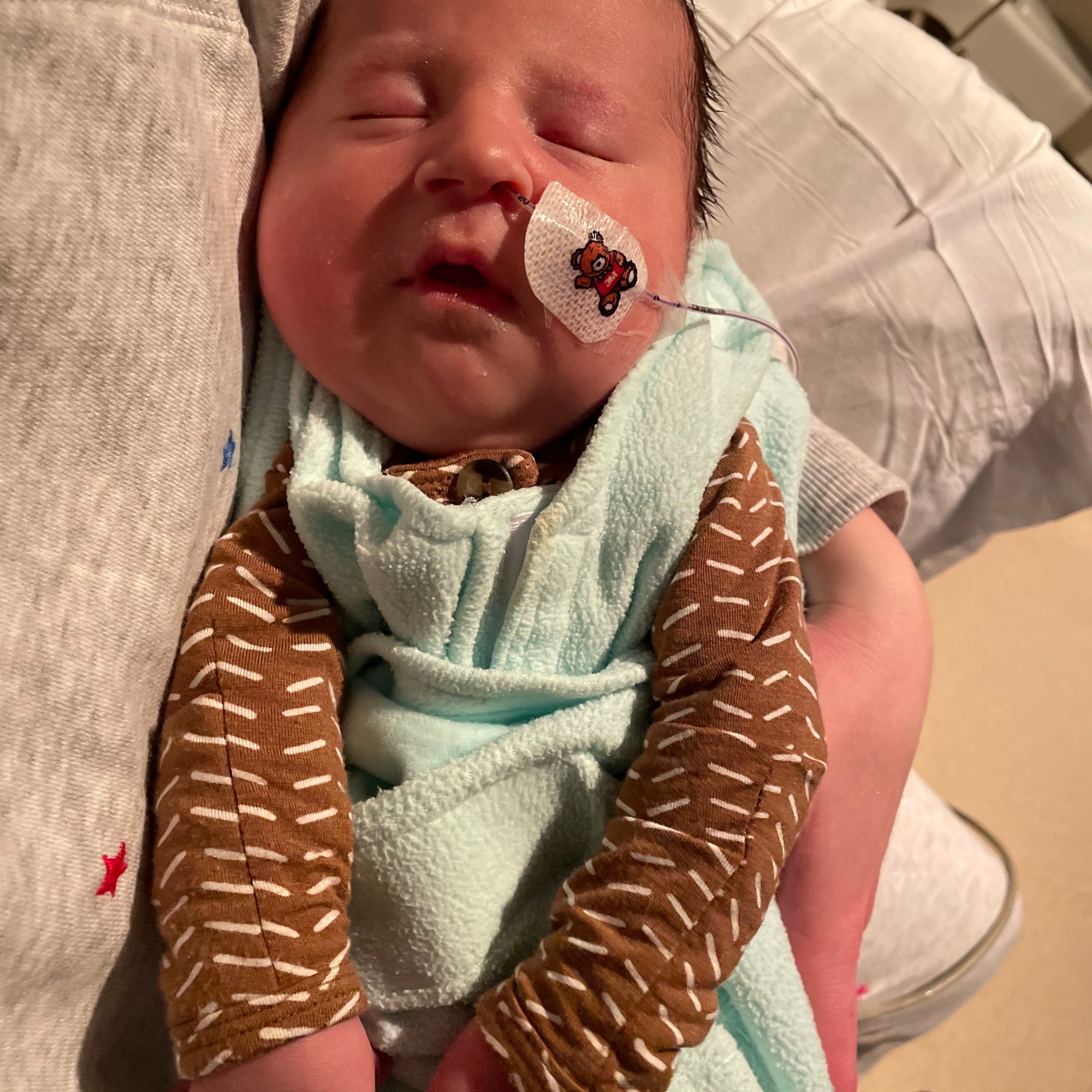

The geneticist decided that it’d be best to do whole exome sequencing on Dax to hopefully find our answers and give us some clarity.
 The Story of Dax Wilder